Email

Version 1 of the EDRM Enron Data Set NOW AVAILABLE – eDiscovery Trends

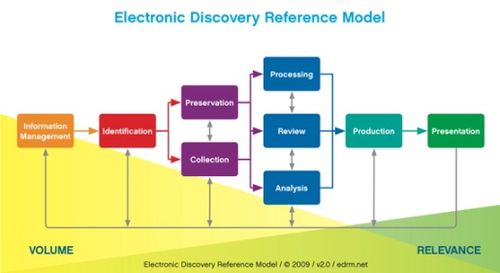
Last week, we reported from the Annual Meeting for the Electronic Discovery Reference Model (EDRM) group and discussed some significant efforts and accomplishments by each of the project teams within EDRM.  That included an update from the EDRM Data Set project, where an effort was underway to identify and remove personally-identifiable information (“PII”) data from the EDRM Data Set.  Now, version 1 of the Data Set is completed and available for download.

To recap, the EDRM Enron Data Set, sourced from the FERC Enron Investigation release made available by Lockheed Martin Corporation, has been a valuable resource for eDiscovery software demonstration and testing (we covered it here back in January 2011).  Initially, the data was made available for download on the EDRM site, then subsequently moved to Amazon Web Services (AWS).  However, after much recent discussion about PII data (including social security numbers, credit card numbers, dates of birth, home addresses and phone numbers) available within FERC (and consequently the EDRM Data Set), the EDRM Data Set was taken down from the AWS site.

Yesterday, EDRM, along with Nuix, announced that they have republished version 1 of the EDRM Enron PST Data Set (which contains over 1.3 million items) after cleansing it of private, health and personal financial information. Nuix and EDRM have also published the methodology Nuix’s staff used to identify and remove more than 10,000 high-risk items.

As noted in the announcement, Nuix consultants Matthew Westwood-Hill and Ady Cassidy used a series of investigative workflows to identify the items, which included:

  • 60 items containing credit card numbers, including departmental contact lists that each contained hundreds of individual credit cards;
  • 572 items containing Social Security or other national identity numbers—thousands of individuals’ identity numbers in total;
  • 292 items containing individuals’ dates of birth;
  • 532 items containing information of a highly personal nature such as medical or legal matters.

While the personal data was (and still is) available via FERC long before the EDRM version was created, completion of this process will mean that many in the eDiscovery industry that rely on this highly useful data set for testing and software demonstration can now use a version which should be free from sensitive personal information!

For more information regarding the announcement, click here. The republished version 1 of the Data Set, as well as the white paper discussing the methodology is available at nuix.com/enron.  Nuix is currently applying the same methodology to the EDRM Enron Data Set v2 (which contains nearly 2.3 million items) and will publish to the same site when complete.

So, what do you think?  Have you used the EDRM Enron Data Set?  If so, do you plan to download the new version?  Please share any comments you might have or if you’d like to know more about a particular topic.

Disclaimer: The views represented herein are exclusively the views of the author, and do not necessarily represent the views held by CloudNine Discovery. eDiscoveryDaily is made available by CloudNine Discovery solely for educational purposes to provide general information about general eDiscovery principles and not to provide specific legal advice applicable to any particular circumstance. eDiscoveryDaily should not be used as a substitute for competent legal advice from a lawyer you have retained and who has agreed to represent you.

Skip the HASH When Deduping Outlook MSG Files – eDiscovery Best Practices

As we discussed recently in this blog, Microsoft® Outlook emails can take many forms.  One of those forms is the MSG file extension, which is used to represent a self-contained unit for an individual message “family” (email and its attachments).  MSG files can exist on your computer in the same folders as Word, Excel and other data files.  But, when it comes to deduping those MSG files, the approach to do so is typically different.

A few years ago, I was assisting a client and collecting emails from their email archiving system for discovery, outputting the selected emails to individual MSG files (per their request).  Because this was an enterprise-wide search of email archives, the searches that I performed found the same emails again and again in different custodian folders.  There was literally hundreds of thousands of duplicate emails in this collection.  Of course, this is typical – anytime you send an email to three co-workers, all four of you have a copy of the email (assuming none of you deleted it).  If the email is responsive and your goal is to dedupe across custodians, you only want to review and produce one copy, not four.

However, had I performed a HASH value identification of duplicates on those output MSG files, I would find no duplicates.  Why is that?

That’s because each MSG file contains a field which stores the Creation Date and Time. Because this value will be set at the date and time the MSG is saved, two emails with otherwise identical content will not be considered duplicates based on the HASH value.  Remember how “drag and drop” sets the Creation Date and Time of the copy to the current date and time?  The same thing happens when an MSG file is created.

Hmmm, what to do?  Typically, the approach for MSG files is to use key metadata fields to identify duplicates.  Many processing vendors use a typical combination of fields that consist of: From, To, CC, BCC, Subject, Attachment Name, Sent Date/Time and Body of the email.  Some use those fields only on MSG files; others use it on all emails (to dedupe individual emails within MSG files against those same emails within an OST or a PST file).

So, if you’re hungry to eliminate duplicates from your collection of MSG files, skip the HASH and use the metadata fields.  It’s much more (ful)filling.

So, what do you think?  Have you encountered any challenges when it comes to deduping emails?  Please share any comments you might have or if you’d like to know more about a particular topic.

Disclaimer: The views represented herein are exclusively the views of the author, and do not necessarily represent the views held by CloudNine Discovery. eDiscoveryDaily is made available by CloudNine Discovery solely for educational purposes to provide general information about general eDiscovery principles and not to provide specific legal advice applicable to any particular circumstance. eDiscoveryDaily should not be used as a substitute for competent legal advice from a lawyer you have retained and who has agreed to represent you.

When Lawyers Get Sued, They Have Preservation Obligations Too – eDiscovery Case Law

In Distefano v. Law Offices of Barbara H. Katsos, PC., No. CV 11-2893 (JS) (AKT) (D. ED NY Mar. 29, 2013), New York Magistrate Judge A. Kathleen Tomlinson found that the defendant (an attorney who was being sued by the plaintiff she previously represented for breach of contract, negligence/legal malpractice, and breach of fiduciary duty/duty of care) had a duty to preserve information from a discarded computer and ordered a hearing for the defendant to address a number of questions to determine the potential relevance of the destroyed data and whether the defendant had a sufficiently culpable state of mind.

The plaintiff alleged professional negligence by the defendant related to her representation of his franchise business for Cold Stone Creamery stores.  During a Discovery Status Conference, it was revealed that the defendant had gotten rid of her computer before the litigation began, as she noted in her affidavit that she was advised by a third-party individual who fixed her office computers that they could not be repaired.  As she used AOL for email correspondence, she contacted AOL “to inquire if emails from several years ago could be recovered by AOL”, but was told that they “could not recover emails from several years ago for the stated email address”.  After receiving the defendant’s affidavit, the plaintiff filed a motion for spoliation.

With regard to the defendant’s duty to preserve information related to her representation of the plaintiff, Judge Tomlinson stated:

“The Court concludes that Katsos’ duty to preserve documents arose as early as late February 2009, when Michael DiStefano terminated the attorney-client relationship between Plaintiffs and Defendants.”  On February 24, 2009, the plaintiff send the defendant a letter terminating the representation “immediately” and stated that he would “communicate with you further, in writing, so as to explain the reasons why I am discharging you.”  Noting that the “language of Michael DiStefano’s letter gives the appearance that Distefano was not satisfied with Katsos’ work”, Judge Tomlinson also noted that “[i]n assessing whether litigation was reasonably foreseeable in these circumstances, the Court cannot ignore the fact that Katsos is an attorney and should have been attuned to the prospect of litigation.”

To determine the defendant’s culpable state of mind, Judge Tomlinson ordered a hearing on May 13 for the defendant to “be prepared to testify regarding, among other things, the following areas:

  1. Katsos’ normal document preservation/retention/deletion/destruction practices;
  2. the number of computers utilized in her office prior to 2009, when the computers were purchased, and the specific circumstances surrounding the breakdown of each of those computers;
  3. the service agreements for those computers and the vendor(s) used;
  4. whether Katsos maintained a network server;
  5. AOL’s automatic deletion policies to the extent they were explained to Katsos;
  6. a complete list of every email address used by Defendant Law Offices of Barbara H. Katsos, PC and Defendant Barbara Katsos or her staff to communicate with Plaintiffs;
  7. Katsos’ attempts to gain access to the email accounts used by her paralegals and interns referenced in Paragraph 5 of Katsos Aff. II and page 16 of Plaintiffs’ Memorandum;
  8. the document preservation steps undertaken by Katsos when Plaintiffs instituted an adversary proceeding against her in March of 2010;
  9. the retention and utilization of the services of Jan Sloboda.” (the third-party individual that advised her to replace her computers)

The plaintiffs were also ordered to identify “general categories of documents that have been adversely affected” to help determine the relevance of the data in question and were permitted to question the defendant at the hearing.

So, what do you think?  Was this an appropriate course of action to determine whether sanctions are appropriate?  Please share any comments you might have or if you’d like to know more about a particular topic.

Disclaimer: The views represented herein are exclusively the views of the author, and do not necessarily represent the views held by CloudNine Discovery. eDiscoveryDaily is made available by CloudNine Discovery solely for educational purposes to provide general information about general eDiscovery principles and not to provide specific legal advice applicable to any particular circumstance. eDiscoveryDaily should not be used as a substitute for competent legal advice from a lawyer you have retained and who has agreed to represent you.

Court Agrees with Defendant that Preserving 5 Terabytes of Data is Enough – eDiscovery Case Law

In United States ex rel. King v. Solvay, S.A., No. H-06-2662, 2013 U.S. Dist. LEXIS 30752 (S.D. Tex. Mar. 5, 2013), Texas District Judge Gray Miller granted the defendant’s request for a protective order where the plaintiffs only offered generalized, unsupported claims to support their request to extend and expand discovery.

In this False Claims Act, the plaintiffs, qui tam relators whose claims led to investigation by several state attorneys general, claimed the defendants engaged in off-label promotion of drugs, violated the anti-kickback statute, and retaliated against them.

The defendant, Solvay Pharmaceuticals, now doing business as Abbott Products (after Abbott acquired Solvay in 2010), filed a motion seeking a protective order from having to respond to the relators’ discovery requests about ongoing fraud, which it claimed were irrelevant to the claims in the lawsuit.

During the course of discovery, the company imposed a litigation hold and preserved more than 2,500 eMail backup tapes, more than 56,000 network share backup tapes, and roughly 5 terabytes of data on its network share drives—all dating from the 1990s through 2010 – and covering 89 custodians, both former and current employees. But the relators requested more. If the litigation hold were to expand to accommodate the relators’ requests, it would require the company to dedicate additional server space to store the data. Moreover, the company argued that it would cost at least $480,000 to process the eMails it was already preserving, and the review of those eMails would cost $2.3 million, excluding quality control, privilege review, and production costs. Adding the additional data from after Abbott acquired Solvay would drive these costs substantially higher. The relators objected, suggesting that the company’s “sweeping generalizations” about the potential burden were inaccurate. In the alternative, the relators agreed to an end date of December 31, 2012 or to depose witnesses to determine the appropriate cutoff.

Under Federal Rule of Civil Procedure 26(c)(1), courts can limit discovery to protect parties from undue burden or expense. Judge Miller agreed with the defendant that a few references that conduct was continuing “‘to the present’ in a 267-page complaint containing more than 768 paragraphs does not justify the burden and expense associated with unfettered discovery ‘to the present’ in a case in which discovery is already going to be incredibly expensive and time-consuming.” Although Judge Miller was willing to extend the relevant time frame to include some claims outside of the relators’ personal knowledge because the real party in interest was the United States, he was not willing to go so far as to permit the “generalized claims of ongoing conduct to form the basis for a fishing expedition.”  As a result, he granted the motion for a protective order, limiting the time frames for Solvay’s discovery obligations.

So, what do you think?  Was the judge right to limit the defendant’s discovery obligations?  Please share any comments you might have or if you’d like to know more about a particular topic.

Case Summary Source: Applied Discovery (free subscription required).  For eDiscovery news and best practices, check out the Applied Discovery Blog here.

Disclaimer: The views represented herein are exclusively the views of the author, and do not necessarily represent the views held by CloudNine Discovery. eDiscoveryDaily is made available by CloudNine Discovery solely for educational purposes to provide general information about general eDiscovery principles and not to provide specific legal advice applicable to any particular circumstance. eDiscoveryDaily should not be used as a substitute for competent legal advice from a lawyer you have retained and who has agreed to represent you.

Outlook Emails Can Take Many Forms – eDiscovery Best Practices

Most discovery requests include a request for emails of parties involved in the case.  Email data is often the best resource for establishing a timeline of communications in the case and Microsoft® Outlook is the most common email program used in business today.  Outlook emails can be stored in several different forms, so it’s important to be able to account for each file format when collecting emails that may be responsive to the discovery request.

There are several different file types that contain Outlook emails, including:

EDB (Exchange Database): The server files for Microsoft Exchange, which is the server environment which manages Outlook emails in an organization.  In the EDB file, a user account is created for each person authorized at the company to use email (usually, but not always, employees). The EDB file stores all of the information related to email messages, calendar appointments, tasks, and contacts for all authorized email users at the company.  EDB files are the server-side collection of Outlook emails for an organization that uses Exchange, so they are a primary source of responsive emails for those organizations.  Not all organizations that use Outlook use Exchange, but larger organizations almost always do.

OST (Outlook Offline Storage Table): Outlook can be configured to keep a local copy of a user’s items on their computer in an Outlook data file that is named an offline Outlook Data File (OST). This allows the user to work offline when a connection to the Exchange computer may not be possible or wanted. The OST file is synchronized with the Exchange computer when a connection is available.  If the synchronization is not current for a particular user, their OST file could contain emails that are not on the EDB server file, so OST files may also need to be searched for responsive emails.

PST (Outlook Personal Storage Table): A PST file is another Outlook data file that stores a user’s messages and other items on their computer. It’s the most common file format for home users or small organizations that don’t use Exchange, but instead use an ISP to connect to the Internet (typically through POP3 and IMAP).  In addition, Exchange users may move or archive messages to a PST file (either manually or via auto-archiving) to move them out of the primary mailbox, typically to keep their mailbox size manageable.  PST files often contain emails not found in either the EDB or OST files (especially when Exchange is not used), so it’s important to search them for responsive emails as well.

MSG (Outlook MSG File): MSG is a file extension for a mail message file format used by Microsoft Outlook and Exchange.  Each MSG file is a self-contained unit for the message “family” (email and its attachments) and individual MSG files can be saved simply by dragging messages out of Outlook to a folder on the computer (which could then be stored on portable media, such as CDs or flash drives).  As these individual emails may no longer be contained in the other Outlook file types, it’s important to determine where they are located and search them for responsiveness.  MSG is also the most common format for native production of individual responsive Outlook emails.

Other Outlook file types that might contain responsive information are EML (Electronic Mail), which is the Outlook Express email format and PAB (Personal Address Book), which, as the name implies, stores the user’s contact information.

Of course, Outlook emails are not just stored within EDB files on the server or these other file types on the local workstation or portable media; they can also be stored within an email archiving system or synchronized to phones and other portable devices.  Regardless, it’s important to account for the different file types when collecting potentially responsive Outlook emails for discovery.

So, what do you think?  Are you searching all of these file types for responsive Outlook emails?  Please share any comments you might have or if you’d like to know more about a particular topic.

Disclaimer: The views represented herein are exclusively the views of the author, and do not necessarily represent the views held by CloudNine Discovery. eDiscoveryDaily is made available by CloudNine Discovery solely for educational purposes to provide general information about general eDiscovery principles and not to provide specific legal advice applicable to any particular circumstance. eDiscoveryDaily should not be used as a substitute for competent legal advice from a lawyer you have retained and who has agreed to represent you.

Award to Apple in Samsung Case Cut Almost in Half, For Now – eDiscovery Case Law

In Apple Inc. v. Samsung Elecs. Co., Case No.: C 11-CV-01846-LHK (N.D. Cal. Mar. 1, 2013), District Judge Lucy Koh reduced the amount of the previous jury award against Samsung in its ongoing intellectual property case from nearly $1.05 billion to over $598 million, due to ordering a new trial on damages for several Samsung products that amounted to over $450 million being stricken from the jury’s award.

In August of last year, a jury of nine found that Samsung infringed all but one of the seven patents at issue and found all seven of Apple’s patents valid – despite Samsung’s attempts to have them thrown out. They also determined that Apple didn’t violate any of the five patents Samsung asserted in the case.  Apple had been requesting $2.5 billion in damages.  Apple later requested additional damages of $707 million to be added to the $1.05 billion jury verdict.  This case was notable from an eDiscovery perspective due to the adverse inference instruction issued by California Magistrate Judge Paul S. Grewal against Samsung just prior to the start of trial for spoliation of data, though it appears that the adverse inference instruction did not have a significant impact in the verdict.

Notice of the Patents

A significant portion of this ruling was related to notice of the patents.  As Judge Koh noted in her ruling, “Under 35 U.S.C. § 287(a), there can be no damages award where a defendant did not have actual or constructive notice of the patent or registered trade dress at issue. Thus, it is improper to award damages for sales made before the defendant had notice of the patent, and an award that includes damages for sales made before notice of any of the intellectual property (“IP”) infringed is excessive as a matter of law.”  The parties disputed whether Apple had given Samsung notice of each of the patents prior to the filing of the complaint and the amended complaint.

Apple had provided to the Court numbers necessary to calculate Samsung’s profits and reasonable royalty awards based on damages numbers provided by Apple’s damages expert, but with later notice dates, enabling the Court, for some products, to calculate how much of the jury’s award compensated for the sales before Samsung had notice of the relevant IP.  However, as Judge Koh noted, “for other products, the jury awarded an impermissible form of damages for some period of time, because Samsung had notice only of utility patents for some period, but an award of infringer’s profits was made covering the entire period from August 4, 2010 to June 15, 2012. For these products, the Court cannot remedy the problem by simply subtracting the extra sales.” {emphasis added}  The Court had instructed the jury that infringer’s profits are not a legally permissible remedy for utility patent infringement.

Ruling

Therefore, Judge Koh ordered a new trial on damages for 14 products, totaling $450,514,650 being stricken from the jury’s award.  This left an award of $598,908,892 on the remaining awarded products.

So, what do you think?  What will be the final award and how much will it cost to determine that?  Please share any comments you might have or if you’d like to know more about a particular topic.

Disclaimer: The views represented herein are exclusively the views of the author, and do not necessarily represent the views held by CloudNine Discovery. eDiscoveryDaily is made available by CloudNine Discovery solely for educational purposes to provide general information about general eDiscovery principles and not to provide specific legal advice applicable to any particular circumstance. eDiscoveryDaily should not be used as a substitute for competent legal advice from a lawyer you have retained and who has agreed to represent you.

Stored Communications Act Limits Production of Google Emails – eDiscovery Case Law

In Optiver Australia Pty. Ltd. & Anor. v. Tibra Trading Pty. Ltd. & Ors. (N.D.Cal., January 23, 2013), California Magistrate Judge Paul S. Grewal granted much of the defendant’s motion to quash subpoena of Google for electronic communications sent or received by certain Gmail accounts allegedly used by employees of the defendant because most of the request violated the terms of the Stored Communications Act.

The plaintiff alleged that several of its former employees copied the plaintiff’s proprietary source code, left the plaintiff company, and used the code to found the defendant in 2006.  After receiving a production from the defendant, the plaintiff “suspected that key emails relating to the allegedly stolen code were previously deleted”; as a result, the Federal Court of Australia ordered further discovery.  The defendant filed an ex parte application for judicial assistance pursuant to 28 U.S.C. § 1782 to serve a subpoena upon Google for documents to be used in the foreign proceeding, which was granted.

The plaintiff submitted two requests to Google, as follows:

  • “Request One: Documents sufficient to identify the recipient(s), sender, subject, date sent, date received, date read, and date deleted of emails, email attachments, or Google Talk messages that contain either of the terms ‘PGP’ or ‘Optiver’ (case insensitive) sent or received between January 1, 2006 and December 31, 2007” for selected email addresses; and
  • “Request Two: Documents sufficient to show the recipient(s), sender, subject, date sent, date received, date read, and date deleted of emails, email attachments, or Google Talk messages sent or received between November 3, 2005 to December 31, 2009 that were sent to or from” selected email addresses.

The defendant moved to quash the subpoena.

Judge Grewal noted that “it is well-established that civil subpoenas, including those issued pursuant to 28 U.S.C. § 1782, are subject to the prohibitions of the Stored Communications Act (‘SCA)”, which was passed in 1986.  The SCA prohibits service providers from knowingly disclosing the contents of a user’s electronic communications.

Judge Grewal ruled that the plaintiff’s “Request One is invalid because it seeks disclosure of the terms ‘Optiver’ and ‘PGP’” and granted the defendant’s motion to quash that request.  As for Request Two, Judge Grewal ruled that it “violates the SCA insofar as it seeks the subject of the communications, but the remainder is permissible.”  Therefore, he ruled that Google was required to provide only the following: “Documents sufficient to show the recipient(s), sender, date sent, date received, date read, and date deleted of emails, email attachments, or Google Talk messages sent or received between November 3, 2005 to December 31, 2009 that were sent to or from the email addresses listed”.

So, what do you think?  Was the correct information excluded due to the SCA?  Please share any comments you might have or if you’d like to know more about a particular topic.

Disclaimer: The views represented herein are exclusively the views of the author, and do not necessarily represent the views held by CloudNine Discovery. eDiscoveryDaily is made available by CloudNine Discovery solely for educational purposes to provide general information about general eDiscovery principles and not to provide specific legal advice applicable to any particular circumstance. eDiscoveryDaily should not be used as a substitute for competent legal advice from a lawyer you have retained and who has agreed to represent you.

2012 eDiscovery Year in Review: eDiscovery Case Law, Part 4

As we noted the past three days, eDiscoveryDaily published 98 posts related to eDiscovery case decisions and activities over the past year, covering 62 unique cases!  Yesterday, we looked back at cases related to admissibility and the duty to preserve and produce electronically stored information (ESI).  Today, let’s take a look back at cases related to sanctions and spoliation.

We grouped those cases into common subject themes and have reviewed them over the past few posts, ending today.  Perhaps you missed some of these?  Now is your chance to catch up!

SPOLIATION / SANCTIONS

All hail the returning champion!  I’ll bet that you won’t be surprised that, once again, the topic with the largest number of case law decisions related to eDiscovery are those related to sanctions and spoliation issues.  Of the 62 cases we covered this past year, almost a third of them (20 total cases) related to sanctions and spoliation issues.  We found them in a variety of sources, even The Hollywood Reporter!  Here they are.  And, as you’ll see by the first case (and a few others), sanctions requested are not always granted – at least not yet.

Sanctions for Violating Motion to Compel Production? Not Yet.  In Fidelity National Title Insurance Co. v. Captiva Lake Investments, LLC, where a party’s “conduct [did not] rise[ ] to the level of a willful violation of the order compelling production” because it was continually working toward the proper production of documents requested by its adversary, a court concluded that the adversary’s motion for sanctions was premature.

“Rap Weasel” Forced to Honor $1 Million Reward Offered via YouTube.  It isn’t every day that eDiscoveryDaily has reason to reference The Hollywood Reporter in a story about eDiscovery case law, but even celebrities have eDiscovery preservation obligations during litigation. In Augstein v. Leslie, New York District Judge Harold Baer imposed an adverse inference sanction against hip hop and R&B artist Ryan Leslie for “negligent destruction” of a hard drive returned to him by the plaintiff after a $1 million reward was offered via YouTube. On November 28, a jury ordered him to pay the $1 million reward to the plaintiff.

Plaintiff Hammered with Case Dismissal for “Egregious” Discovery Violations.  Apparently, destroying your first computer with a sledgehammer and using Evidence Eliminator and CCleaner on your second computer (when you have a duty to preserve both) are not considered to be best practices for preservation. Who knew? 😉

Rambus’ “Shred Days” Result in Sanctions Yet Again.  In Hynix Semiconductor Inc. v. Rambus, Inc., California District Judge Ronald Whyte used his discretion to fashion an appropriate fact-specific sanctions award after it found a party willfully destroyed evidence despite reasonably foreseeable litigation, it destroyed such evidence in bad faith, and the opposing party suffered prejudice.

Defendant Ordered to Retain Outside Vendor, Monetary Sanction Awarded.  In Carrillo v. Schneider Logistics, Inc., California Magistrate Judge David Bristow ordered the defendant to “retain, at its expense, an outside vendor, to be jointly selected by the parties, to collect electronically stored information and email correspondence”. The defendant was ordered to produce all surveillance videotapes responsive to plaintiffs’ discovery requests and monetary sanctions were awarded for plaintiff’s attorney fees and costs incurred as a result of the defendant’s discovery violations.

Government Document Productions Can Be Like Water Torture.  In Botell v. United States, Magistrate Judge Gregory Hollows noted that the US Government’s “document production performance in these proceedings has been akin to a drop-by-drop water torture” and ordered a preclusion order prohibiting the US Government “from presenting evidence in its case that had been requested by plaintiffs in the Requests for Production, but which has not been produced” as of the date of the order. The US was also still required to produce the documents, whether they planned to use them or not. Judge Hollows also noted that the “Plaintiff has not waived any motion to seek further sanctions regarding non-production of documents, or spoliation of documents.”

Defendant Appeals Sanctions, Only to See Sanction Amount Raised on Appeal.  In Multifeeder Tech. Inc. v. British Confectionery Co. Ltd., the defendant had been previously sanctioned $500,000 ($475,000 to the plaintiff and $25,000 to the court) and held in contempt of court by the magistrate judge for spoliation, who also recommended an adverse inference instruction be issued at trial. The defendant appealed to the district court, where Minnesota District Judge John Tunheim increased the award to the plaintiff to $600,000. Oops!

eDiscovery Sanctions Can Happen in Police Brutality Cases Too.  As reported in the Seattle Times, Pierce County (Washington) Superior Court Judge Stephanie Arend issued a $300,000 sanction against King County for failure to produce key documents illustrating the previous troubling behavior of a sheriff deputy who tackled Christopher Sean Harris and left him permanently brain-damaged. Judge Arend also indicated that the county would be liable for attorneys’ fees and possibly compensatory damages for the Harris family. This after King County had settled with the Harris family for $10 million in January 2011 during a civil trial in King County Superior Court.

When is a Billion Dollars Not Enough?  When it’s Apple v. Samsung, of course! According to the Huffington Post, Apple Inc. requested a court order for a permanent U.S. sales ban on Samsung Electronics products found to have violated its patents along with additional damages of $707 million on top of the $1.05 billion dollar verdict won by Apple last month, already one of the largest intellectual-property awards on record.

No Sanctions For Spoliation With No Bad Faith.  In Sherman v. Rinchem Co., the plaintiff in a defamation case against his former employer appealed the district court’s denial of both his summary judgment motion and request for an adverse inference jury instruction. The district court had decided the case under Minnesota law, which “provides that ‘even when a breach of the duty to preserve evidence is not done in bad faith, the district court must attempt to remedy any prejudice that occurs as a result of the destruction of the evidence.’” In contrast, as the Eighth Circuit pointed out, in this case where the parties had diversity, and a question remained as to whether state or federal spoliation laws were applicable, federal law requires “a finding of intentional destruction indicating a desire to suppress the truth” in order to impose sanctions.

Pension Committee Precedent Takes One on the Chin.  In Chin v. Port Authority of New York and New Jersey, the Second Circuit Court of Appeals ruled it was within a district court’s discretion not to impose sanctions against a party for its failure to institute a litigation hold.

More Sanctions for Fry’s Electronics.  In E.E.O.C. v Fry’s Electronics, Inc., Washington District Judge Robert S. Lasnik ordered several sanctions against the defendant in this sexual harassment case (including ordering the defendant to pay $100,000 in monetary sanctions and ordering that certain evidence be considered presumptively admissible at trial), but stopped short of entering a default judgment against the defendant. This ruling came after having previously ordered sanctions against the defendant less than two months earlier.

No Sanctions When You Can’t Prove Evidence Was Destroyed.  In Omogbehin v. Cino, the plaintiff claimed that the District Court erred in denying his motion for spoliation sanctions and appealed to the US Third Circuit Court of Appeals, but lost as the appellate court upheld the rulings by the district judge and magistrate judge.

“Naked” Assertions of Spoliation Are Not Enough to Grant Spoliation Claims.  In Grabenstein v. Arrow Electronics, Inc., Colorado Magistrate Judge Kristen L. Mix denied the plaintiff’s motion for sanctions, finding that their claims of spoliation were based on “naked” assertions that relevant eMails must exist even though the plaintiff could not demonstrate that such other eMails do or did exist. The motion was also denied because the plaintiff could not establish when the defendant had deleted certain eMail messages, thereby failing to prove claims that the defendant violated its duty to preserve electronic evidence. Judge Mix noted that sanctions are not justified when documents are destroyed in good faith pursuant to a reasonable records-retention policy, if that’s prior to the duty to preserve such documents.

Spoliation of Data Can Lead to Your Case Being Dismissed.  In In 915 Broadway Associates LLC v. Paul, Hastings, Janofsky & Walker, LLP, the New York Supreme Court imposed the severest of sanctions against the plaintiffs for spoliation of evidence – dismissal of their $20 million case.

Better Late Than Never? Not With Discovery.  In Techsavies, LLC v. WFDA Mktg., Inc., Magistrate Judge Bernard Zimmerman of the United States District Court for the District of Northern California sanctioned the defendant for repeated failures to produce responsive documents in a timely manner because of their failure to identify relevant data sources in preparing its initial disclosures.

The Zubulake Rules of Civil Procedure.  As noted in Law Technology News, the New York Appellate Division has embraced the federal standards of Zubulake v. UBS Warburg LLC, in two case rulings within a month’s time, one of which resulted in sanctions against one of the parties for spoliation of data.

eDiscovery Violations Leave Delta Holding the Bag.  In the case In re Delta/AirTran Baggage Fee Antitrust Litig., U.S. District Judge Timothy Batten ordered Delta to pay plaintiff attorney’s fees and costs for eDiscovery issues in consolidated antitrust cases claiming Delta and AirTran Holdings, Inc. conspired to charge customers $15 to check their first bag. Noting that there was a “huge hole” in Delta’s eDiscovery process, Judge Batten reopened discovery based on defendants’ untimely production of records and indications that there was overwriting of backup tapes, inconsistencies in deposition testimony and documents, and neglect in searching and producing documents from hard drives.

Burn Your Computer and the Court Will Burn You.  In Evans v. Mobile Cnty. Health Dept., Alabama Magistrate Judge William Cassady granted a motion for sanctions, including an adverse inference instruction, where the plaintiff had burned and destroyed her computer that she used during the time she claimed she was harassed.

Appeals Court Decides Spoliation Finding For Not Producing Originals is Bull.  In Bull v. UPS Inc., the Third Circuit court conceded that “producing copies in instances where the originals have been requested may constitute spoliation if it would prevent discovering critical information”. However, it found that in this case, the District Court erred in finding that spoliation had occurred and in imposing a sanction of dismissal with prejudice.

So, what do you think?  Did you miss any of these?  Please share any comments you might have or if you’d like to know more about a particular topic.

Disclaimer: The views represented herein are exclusively the views of the author, and do not necessarily represent the views held by CloudNine Discovery. eDiscoveryDaily is made available by CloudNine Discovery solely for educational purposes to provide general information about general eDiscovery principles and not to provide specific legal advice applicable to any particular circumstance. eDiscoveryDaily should not be used as a substitute for competent legal advice from a lawyer you have retained and who has agreed to represent you.

2012 eDiscovery Year in Review: eDiscovery Case Law, Part 3

As we noted the past two days, eDiscoveryDaily published 98 posts related to eDiscovery case decisions and activities over the past year, covering 62 unique cases!  Yesterday, we looked back at cases related to social media and the first cases approving technology assisted review.  Today, let’s take a look back at cases related to admissibility and the duty to preserve and produce electronically stored information (ESI).

We grouped those cases into common subject themes and will review them over the next few posts.  Perhaps you missed some of these?  Now is your chance to catch up!

ADMISSIBILITY AND DUTY TO PRESERVE AND PRODUCE

Admissibility of ESI, and the duty to preserve and produce it, is more at issue than ever.  Whether the issue is whether certain emails should be considered privileged, whether cloning of computer files is acceptable or whether text messages require substantiation of authorship, parties are disputing what ESI should actually be admissible in litigation.  Parties are also disputing when and where litigation holds are required and whether collection and search practices are acceptable.  In short, there are numerous disputes about data being produced and not being produced.  Here are (a whopping) sixteen cases related to admissibility and the duty to preserve and produce ESI:

Emails Between Husband and Wife Are Not Privileged, If Sent from Work Computer.  In United States v. Hamilton, the Fourth Circuit found that the district court had not abused its discretion in finding that e-mails between the defendant and his wife did not merit marital privilege protection because the defendant had used his office computer and his work e-mail account to send and receive the communications and because he had not taken steps to protect the e-mails in question, even after his employer instituted a policy permitting inspection of e-mails and he was on notice of the policy.

Defendant Had Duty to Preserve Despite No Physical Possession of Documents.  In Haskins v. First American Title Insurance Co., a court found that an insurance company had a duty to issue a litigation hold to its independent title agents because litigation was reasonably foreseeable and the duty to preserve extends to third parties, as long as the documents are “within a party’s possession, custody, or control.” Although it did not have physical possession, the insurance company controlled the agents’ documents because it had “‘the legal right or ability to obtain the documents from [the agents] upon demand.’”

Defendant Compelled to Produce Additional Discovery to Plaintiff.  In Freeman v. Dal-Tile Corp., a case alleging harassment and discrimination, among other claims, against her former employer Dal-Tile Corporation, the plaintiff brought a motion to compel, asserting that some of the defendant’s discovery responses related to its search for ESI were deficient.

Defendant Claiming Not Reasonably Accessible Data Has Some ‘Splaining To Do.  In Murray v. Coleman, the plaintiff alleged harassment and retaliation in connection with his employment with the New York State Department of Correctional Services (DOCS). This discovery dispute arose when the plaintiff requested access to certain electronic records, alleging that the defendants withheld them.

Cloning of Computer Files: When There’s a Will, There’s a Way.  In Matter of Tilimbo, a court held it was permissible to order cloning of computer files where doing so did not place an unreasonable burden on a nonparty, appropriate steps were taken to protect any privileged information, and the nonparty had not previously produced the requested information in hard copy.

Citing Rule 26(g), Court Orders Plaintiff’s Counsel to Disclose Search Strategy.  Our 501st post on the blog addresses S2 Automation LLC v. Micron Technology, where New Mexico District Judge James Browning ordered the plaintiff’s attorneys to disclose the search strategy their client used to identify responsive documents, based on Federal Rule 26(g) that requires attorneys to sign discovery responses and certify that they are “complete and correct.”

Judge Scheindlin Says “No” to Self-Collection, “Yes” to Predictive Coding.  When most people think of the horrors of Friday the 13th, they think of Jason Voorhees. When US Immigration and Customs thinks of Friday the 13th horrors, do they think of Judge Shira Scheindlin?  New York District Judge Scheindlin issued a decision on Friday, July 13, addressing the adequacy of searching and self-collection by government entity custodians in response to Freedom of Information Act (FOIA) requests.

Plaintiff Compelled to Produce Mirror Image of Drives Despite Defendant’s Initial Failure to Request Metadata.  In Commercial Law Corp., P.C. v. FDIC, Michigan District Judge Sean F. Cox ruled that a party can be compelled to produce a mirror image of its computer drives using a neutral third-party expert where metadata is relevant and the circumstances dictate it, even though the requesting party initially failed to request that metadata and specify the format of documents in its first discovery request.

Court Allows Third Party Discovery Because Defendant is an “Unreliable Source”.  Repeatedly referring to the defendant’s unreliability and untrustworthiness in discovery and “desire to suppress the truth,” Nebraska Magistrate Judge Cheryl R. Zwart found, in Peter Kiewit Sons’, Inc. v. Wall Street Equity Group, Inc., that the defendant avoided responding substantively to the plaintiff’s discovery requests through a pattern of destruction and misrepresentation and therefore monetary sanctions and an adverse jury instruction at trial were appropriate.

Inadmissibility of Text Messages Being Appealed.  In October 2011, we covered a caseCommonwealth v. Koch – where a Pennsylvania Superior Court ruled text messages inadmissible, declaring that parties seeking to introduce electronic materials, such as cell phone text messages and email, must be prepared to substantiate their claim of authorship with “circumstantial evidence” that corroborates the sender’s identity. That case, where Amy N. Koch was originally convicted at trial on drug charges (partially due to text messages found on her cell phone), is now being appealed to the state Supreme Court.

Another Case with Inadmissible Text Messages.  Above, we discussed a case where a Pennsylvania Superior Court ruled text messages inadmissible, declaring that parties seeking to introduce electronic materials, such as cell phone text messages and email, must be prepared to substantiate their claim of authorship with “circumstantial evidence” that corroborates the sender’s identity. That case is now being appealed to the state Supreme Court. Today, we have another case – Rodriguez v. Nevada – where text messages were ruled inadmissible.

Court Grants Plaintiff’s Motion to Compel Mirror-Imaging of Defendant’s Computers.  In approving a motion for expedited discovery in United Factory Furniture Corp. v. Alterwitz, Magistrate Judge Cam Ferenbach granted the plaintiff’s motion for a mirror-imaging order after determining the benefit outweighed the burden of the discovery, and it denied as unnecessary the plaintiff’s motion for an order to preserve evidence and a preliminary injunction from spoliation of evidence.

Court Orders eDiscovery Evidentiary Hearing When Parties Are Unable to Cooperate.  A month ago, in Chura v. Delmar Gardens of Lenexa, Inc., Magistrate Judge David J. Waxse ordered an evidentiary hearing to discuss the sufficiency of the defendant’s search for ESI and format of production in response to the plaintiff’s motion to compel additional searching and production.

At The Eleventh Hour, Encrypted Hard Drive Is Decrypted.  In our previous post regarding the case U.S. v. Fricosu, Colorado district judge Robert Blackburn ruled that Ramona Fricosu must produce an unencrypted version of her Toshiba laptop’s hard drive to prosecutors in a mortgage fraud case for police inspection. Naturally, the defendant appealed. On February 21st, the 10th U.S. Circuit Court of Appeals refused to get involved, saying Ramona Fricosu’s case must first be resolved in District Court before her attorney can appeal. She would have been required to turn over the unencrypted contents of the drive as of March 1. However, at the last minute, Colorado federal authorities decrypted the laptop.

Court Rules Exact Search Terms Are Limited.  In Custom Hardware Eng’g & Consulting v. Dowell, the plaintiff and defendant could not agree on search terms to be used for discovery on defendant’s forensically imaged computers. After reviewing proposed search terms from both sides, and the defendant’s objections to the plaintiff’s proposed list, the court ruled that the defendant’s proposed list was “problematic and inappropriate” and that their objections to the plaintiff’s proposed terms were “without merit” and ruled for use of the plaintiff’s search terms in discovery.

KPMG Loses Another Round to Pippins.  As discussed previously in eDiscovery Daily, KPMG sought a protective order in Pippins v. KPMG LLP to require the preservation of only a random sample of 100 hard drives from among those it had already preserved for this and other litigation or shift the cost of any preservation beyond that requested scope. Lawyers for Pippins won a ruling last November by Magistrate Judge James Cott to use all available drives and Judge Cott encouraged the parties to continue to meet and confer to reach agreement on sampling. However, the parties were unable to agree and KPMG appealed to the District Court. In February, District Court Judge Colleen McMahon upheld the lower court ruling.

Tune in tomorrow for more key cases of 2012 and, once again, the most common theme of the year!

So, what do you think?  Did you miss any of these?  Please share any comments you might have or if you’d like to know more about a particular topic.

Disclaimer: The views represented herein are exclusively the views of the author, and do not necessarily represent the views held by CloudNine Discovery. eDiscoveryDaily is made available by CloudNine Discovery solely for educational purposes to provide general information about general eDiscovery principles and not to provide specific legal advice applicable to any particular circumstance. eDiscoveryDaily should not be used as a substitute for competent legal advice from a lawyer you have retained and who has agreed to represent you.

Emails Between Husband and Wife Are Not Privileged, If Sent from Work Computer – eDiscovery Case Law

In United States v. Hamilton, No. 11-4847, 2012 U.S. App. (4th Cir. Dec. 13, 2012), the Fourth Circuit found that the district court had not abused its discretion in finding that e-mails between the defendant and his wife did not merit marital privilege protection because the defendant had used his office computer and his work e-mail account to send and receive the communications and because he had not taken steps to protect the e-mails in question, even after his employer instituted a policy permitting inspection of e-mails and he was on notice of the policy.

This appeal arose after a jury convicted Phillip A. Hamilton, who had been a state legislator, of bribery and extortion under color of official right for using his legislative position to obtain funding for a public university in exchange for employment at the university. Hamilton appealed on several bases, including that the district court had improperly determined that the marital privilege was waived for e-mails sent between Hamilton and his wife. The appeals court reviewed the district court’s determination using an abuse of discretion standard.

E-mails sent between Hamilton and his wife through his work e-mail account spoke of their financial difficulties, his plan to meet with officials at Old Dominion University (“ODU”) to attempt to secure employment, and the salary he hoped to secure. Other messages that Hamilton sent and received (also from his work e-mail) from ODU officials helped show an inextricable connection between his proposed employment with the school and his plan to secure funding for the school.

In reviewing the district court’s refusal to grant marital-privilege protection to e-mails between Hamilton and his wife, the court turned to the Supreme Court’s analysis of the marital privilege in Wolfle v. United States. In Wolfle, the Court pointed out, “‘Communications between . . . spouses, privately made, are generally assumed to have been intended to be confidential, and hence they are privileged.’” But, “‘voluntary disclosure’ of a communication waives the privilege.” The court analogized the circumstances here to the ones in Wolfle in which the Supreme Court deemed the marital privilege waived:

In Wolfle, the Court held that a defendant’s communication with his wife did not come “within the privilege because of [his] voluntary disclosure” of the communication “to a third person, his stenographer.” (citation omitted) The Court explained that, “[n]ormally husband and wife may conveniently communicate without stenographic aid, and the privilege of holding their confidences immune from proof in court may be reasonably enjoyed and preserved without embracing within it the testimony of third persons to whom such communications have been voluntarily revealed.” (citation omitted) Because “[t]he privilege suppresses relevant testimony,” it “should be allowed only when it is plain that marital confidence cannot otherwise reasonably be preserved,” and “[n]othing in this case suggests any such necessity.” (citation omitted)

Likewise, in Hamilton’s case, with e-mail as “the modern stenographer,” Hamilton waived the marital privilege when he used his work e-mail account on his office computer to communicate with his wife, although he was able to “‘conveniently communicate without’” doing so.

Moreover, the court found, Hamilton’s argument that at the time he sent the e-mails to his wife there was no employer-instituted computer usage policy was without merit. The court pointed out that by the time the investigation into Hamilton was underway, such a policy was in place, Hamilton had signed his agreement to it, and Hamilton reaffirmed acknowledgment of the policy “every time he logged onto his work computer” when he “press[ed] a key to proceed to the next step of the log-on process.” The district court found that these facts were sufficient to establish waiver of the marital privilege, and the appellate court agreed. (Nevertheless, the court appeared to say, even if Hamilton had had a reasonable expectation of privacy in his e-mails—before the employer enacted a policy regarding the e-mails, the prior Wolfle analysis precluded any privilege from attaching in these circumstances.)

The appellate court acknowledged the protection deservedly extended to certain marital communications, but ultimately it concluded that this case fell outside those bounds:

Hamilton himself contends that he did not waive the privilege because he “had no reason to believe, at the time he sent and received the e-mails, that they were not privileged,” and he could not waive his privilege retroactively. Amicus, the Electronic Privacy Information Center, adds that it seems “extreme” to “require an employee to scan all archived e-mails and remove any that are personal and confidential every time the workplace use policy changes,” when “employees may not even be aware that archived e-mails exist or know where to find them.” (citation omitted)

In an era in which e-mail plays a ubiquitous role in daily communications, these arguments caution against lightly finding waiver of marital privilege by e-mail usage. But the district court found that Hamilton did not take any steps to protect the e-mails in question, even after he was on notice of his employer’s policy permitting inspection of e-mails stored on the system at the employer’s discretion.

Accordingly, that one may generally have a reasonable expectation of privacy in e-mail, at least before a policy is in place indicating otherwise, does not end our inquiry.

So, what do you think?  Should the privilege have been waived?  Please share any comments you might have or if you’d like to know more about a particular topic.

Case Summary Source: Applied Discovery (free subscription required).  For eDiscovery news and best practices, check out the Applied Discovery Blog here.

Disclaimer: The views represented herein are exclusively the views of the author, and do not necessarily represent the views held by CloudNine Discovery. eDiscoveryDaily is made available by CloudNine Discovery solely for educational purposes to provide general information about general eDiscovery principles and not to provide specific legal advice applicable to any particular circumstance. eDiscoveryDaily should not be used as a substitute for competent legal advice from a lawyer you have retained and who has agreed to represent you.